


Why flexible power equipment matters for diverse aircraft support
by Josh Biggs in Tech, Tips on 9th August 2026Airports rarely operate around one aircraft type, one stand layout or one perfect daily schedule. A widebody may occupy a contact gate in the morning, a narrowbody may move through a fast turnaround an hour later, and a business jet, military aircraft or maintenance aircraft may need support in a completely different part of the airfield.
That variety is part of modern aviation. It is also one of the reasons flexible ground power equipment has become more important.
Aircraft support is no longer only about having enough equipment on site. It is about having the right equipment in the right place, with the right output, at the exact moment the aircraft needs it. For ground handlers, airports, MROs and defense operators, that can make the difference between a smooth operation and a day built around workarounds.
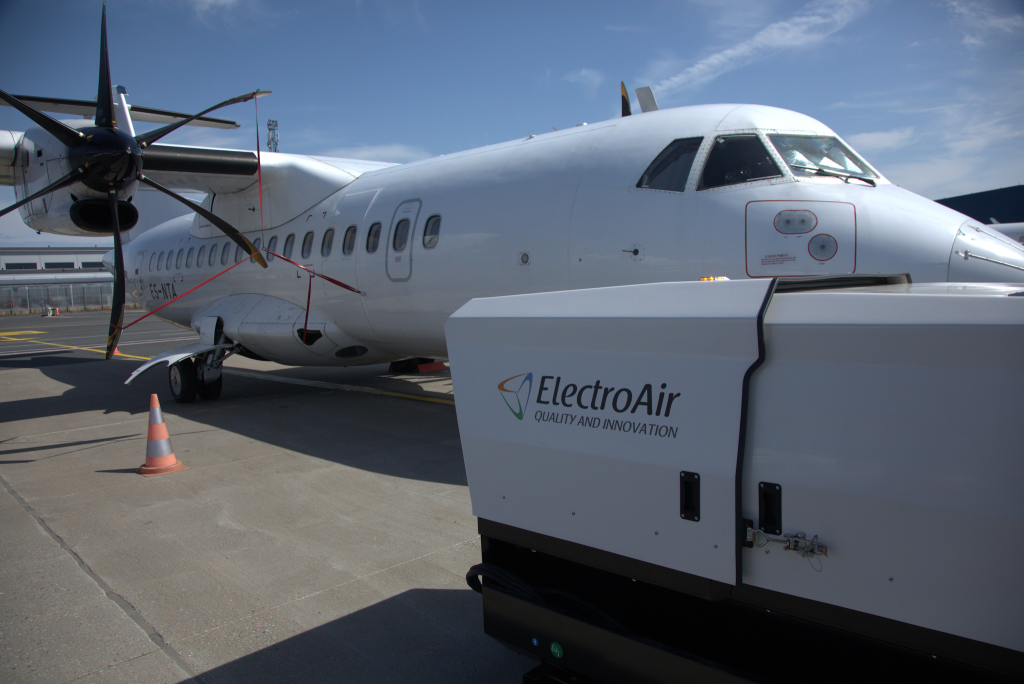
Ground power is a good example. Aircraft on the ground still need stable electrical power for servicing, checks, cabin preparation, maintenance and turnaround activity. Some aircraft require 400 Hz AC power. Others may need 28.5 V DC support. In mixed operations, the ability to support more than one requirement becomes a practical advantage, not a luxury.
In the past, many airports could rely on relatively fixed operating patterns. Today, the picture is more complicated. Airlines adjust fleets. Airports handle more seasonal variation. Ground handlers serve different customers with different aircraft types. MRO teams work on aircraft in hangars, on aprons, at remote areas and sometimes in temporary zones that were not originally designed for long maintenance tasks.
That is where flexible power equipment earns its place.
A mobile ground power unit that can support different aircraft needs gives operators more options. It can be moved where fixed infrastructure is unavailable. It can cover remote stands. It can support irregular operations when the planned stand changes. It can help during construction phases, peak periods or special operations where the normal airport layout does not fully apply.
For operators looking at combined AC/DC capability, the ElectroAir APA-100 diesel-driven mobile GPU is one example of how modern ground power equipment can be designed for varied aircraft support, rather than a single narrow use case.
Flexibility is especially important when airports modernise infrastructure in stages. Fixed 400 Hz systems, charging points and under-bridge equipment can provide strong value at high-use stands. But not every aircraft will be parked at those stands. Remote parking, overflow positions, cargo areas, hangars and defence facilities still require mobile support. Even at well-equipped airports, the operational plan can change faster than the infrastructure.
This is also why the discussion about GSE should not be reduced to diesel versus electric, or fixed versus mobile. Real airside operations usually need a mix. Fixed power supports predictable gate operations. Battery and hybrid units can reduce emissions where the duty cycle and infrastructure make sense. Diesel-driven or plug-in hybrid GPUs can still provide independence where power access is limited.
The more diverse the aircraft operation, the more important this mix becomes.
Ground handlers understand this very well. Their equipment has to follow the aircraft, not the other way around. If a handler supports several airlines or aircraft families, limited equipment flexibility can create bottlenecks. One unit may be available, but not suitable. Another may have the right output, but be positioned too far away. A third may be tied up at a stand where the task is taking longer than expected.
Each of these situations adds friction. It may not always create a visible delay, but it increases pressure on staff and reduces operational margin.
For MROs, the case is just as strong. Maintenance work is less predictable than a standard turnaround. Aircraft may need power for extended periods. Work may happen outside normal gate infrastructure. The equipment must be dependable, serviceable and suitable for the aircraft being supported. In that context, flexible ground power is part of maintenance continuity.
Defence and special-mission operations add another layer. Aircraft may operate in demanding conditions, at temporary locations or under readiness requirements where support equipment must be robust and adaptable. In those environments, equipment that can handle different power needs can reduce dependency on multiple specialised units.
Flexibility also supports long-term procurement value. A GPU that can serve different aircraft and operating scenarios is less likely to become underused if traffic patterns change. It can be redeployed across stands, customers or facilities. That matters because GSE assets are expected to serve for years, not months.
There is also an environmental angle, though it should be treated practically. Flexible power equipment can help reduce unnecessary APU use by making external power available in more locations. But this only works if the equipment is reliable and easy for teams to use. Sustainability targets depend on ground crews trusting the alternative.
For airports evaluating cleaner and more adaptable mobile power, the APA-100 lower-emission ground power unit article provides a useful example of how modern GPU design can connect operational flexibility with lower-emission expectations.
Flexible power equipment matters because aircraft operations are diverse, and becoming more so. Airports that plan only for the ideal stand layout will always face gaps. Operators that invest in adaptable ground power are better prepared for the real airside environment, where aircraft, schedules and infrastructure rarely stay perfectly still.